Why material type matters more than R-value alone
Insulation is specified primarily on thermal performance (R-value), but that performance metric says nothing about how the product was made. Mineral wool, foam plastics (including various blowing agents), cellulose, and fiberglass are chemically and manufacturing-wise unrelated product categories that happen to serve the same building function — their EPDs reflect genuinely different production processes, not just different numbers on the same underlying process.
Key materials typically covered
"Insulation" spans several chemically and manufacturing-wise unrelated product families, each generally declared separately:
- Mineral wool — light-density and heavy-density board, and loose-fill, commonly covered by industry-wide EPDs
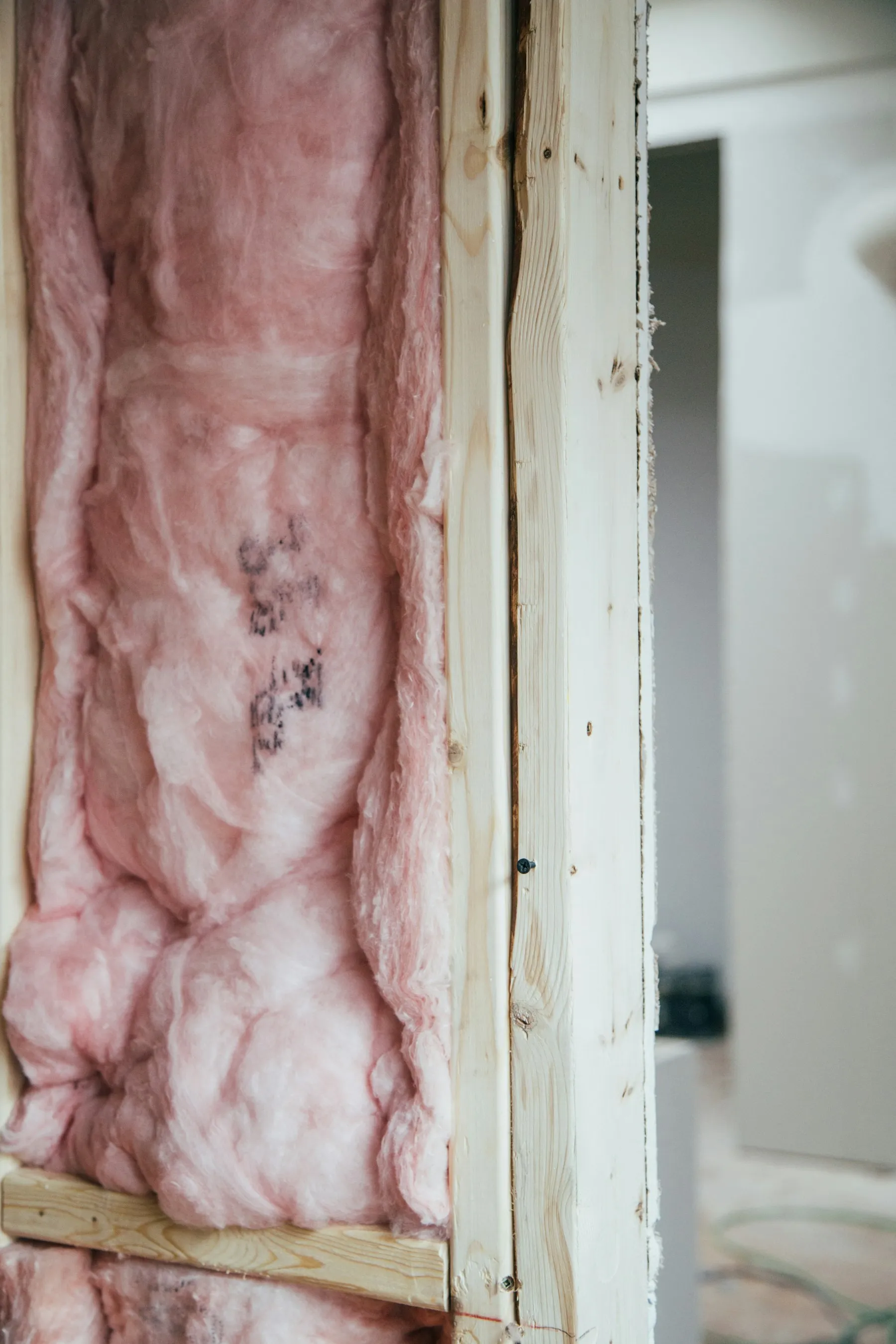
- Fiberglass — batt, roll, and loose-fill fiberglass insulation
- Foam plastic board — XPS, EPS, and polyiso rigid foam board
- Spray foam — spray-applied foam insulation, distinct from rigid board despite sometimes similar chemistry
- Cellulose — loose-fill, typically recycled-paper-based insulation
Key standards and PCRs
Insulation material types are typically covered by separate product-specific PCRs — under EN 15804 in Europe and ISO 21930 internationally. In North America, most fall under the Building Envelope Thermal Insulation PCR family (commonly issued in parts, e.g. "Part B"), reflecting their distinct manufacturing processes. See Product Category Rules for finding the current PCR for a specific insulation type.
Top EPD program operators for Insulation
A small set of program operators covers most insulation-sector EPDs:
- UL Solutions / UL Environment — verifies most North American insulation EPDs, including NAIMA's industry-wide mineral wool declarations
- NAIMA (North American Insulation Manufacturers Association) — the trade association's own program publishes industry-wide EPDs for mineral wool categories (heavy-density board, light-density board, loose-fill)
- ASTM International — also operates PCR and EPD programs relevant to some insulation product types
- Internationally: EPD International, EPD-Global, and Germany's Institut Bauen und Umwelt (IBU) all operate active insulation EPD programs
Notable producers of Insulation
Major insulation manufacturers across mineral wool, fiberglass, and foam plastic categories have published product-specific EPDs for their core product lines; coverage varies by manufacturer, product line, and region. Check a specific manufacturer's own published EPDs rather than assuming coverage across their full catalog.
Benchmark comparisons across insulation material types are planned for the Data section, pending real sourcing.
Sample EPDs for Insulation
To see what an actual insulation EPD looks like, EPD-Global's public registry publishes full documents — for example, Saint-Gobain Denmark's EPD for Isover Spærrulle, a mineral wool product, searchable by NEPD number. In North America, NAIMA publishes its industry-wide mineral wool EPDs directly through the Insulation Institute.
How to Get an Insulation EPD: Step-by-Step
Getting an EPD for a mineral wool, foam plastic, or other insulation product follows the same core process as any other construction product: choosing the applicable PCR, collecting primary production data, building the LCA, and having it independently verified before publication. See How to Get an EPD: Step-by-Step for the full process, or check whether an industry-wide EPD (like NAIMA's for mineral wool) already covers your product before pursuing a product-specific one.
Frequently asked questions
Can I compare EPDs for two different insulation material types directly?
Only carefully — different insulation types are typically covered by different PCRs with different functional units, so a direct GWP-per-R-value comparison across material types (say, mineral wool vs. spray foam) requires checking that both EPDs used a genuinely comparable functional unit and system boundary, not just assuming it.
Do foam plastic insulations have higher embodied carbon than mineral wool or fiberglass?
It varies by specific product and blowing agent used (for foam types), and generalizing across an entire material category risks the same kind of error as comparing concrete mixes by strength class alone — the product-specific EPD is what actually shows a given product's result, not the material category in general.
What's the difference between an industry-wide and a product-specific insulation EPD?
An industry-wide EPD (like NAIMA's for mineral wool board) represents an average across participating manufacturers' facilities for a defined product type, verified by a program operator such as UL Solutions. A product-specific EPD reflects one manufacturer's own facility and formulation, and is more precise for a specific product being specified.
Are foam board and spray foam insulation covered by the same PCR?
Not necessarily — rigid foam board (XPS, EPS, polyiso) and spray-applied foam are manufactured through different processes and are typically covered under the Building Envelope Thermal Insulation PCR family, but as distinct product declarations reflecting their different blowing agents and installation methods.
Where can I see an example of a real insulation EPD?
Public EPD registries such as EPD-Global publish full insulation EPD documents — see Sample EPDs below. NAIMA and individual manufacturers (e.g. Saint-Gobain/Isover, Rockfon) also publish EPDs directly on their own sites.
Sources
- EN 15804:2012+A2:2019, Sustainability of construction works — Environmental product declarations — Core rules for the product category of construction products
- ISO 21930:2017, Sustainability in buildings and civil engineering works — Core rules for environmental product declarations of construction products and services
- North American Insulation Manufacturers Association (NAIMA), Industry-Wide Environmental Product Declaration for Mineral Wool Board